



Japamala: meaning, use and curiosities about the meditation rosary
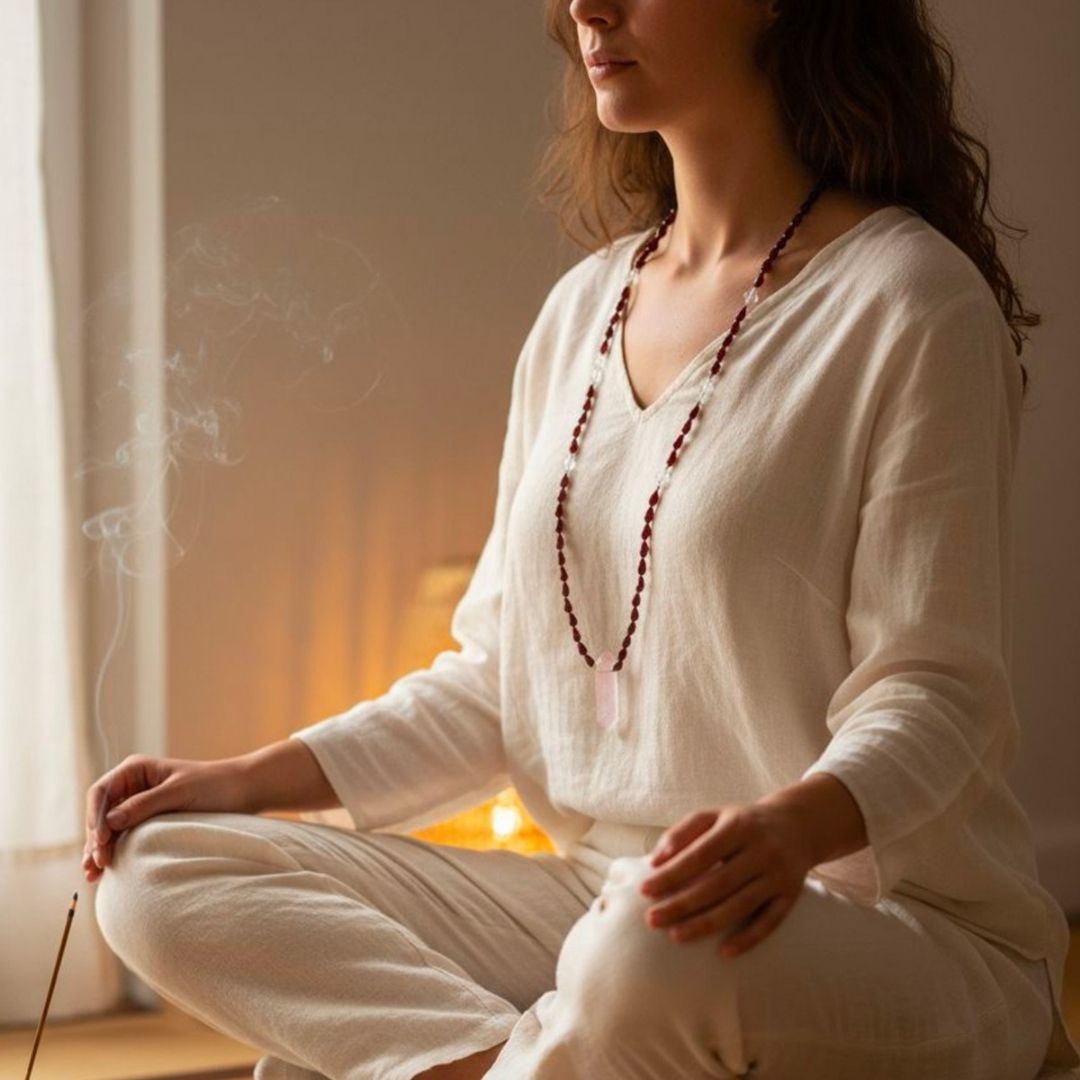
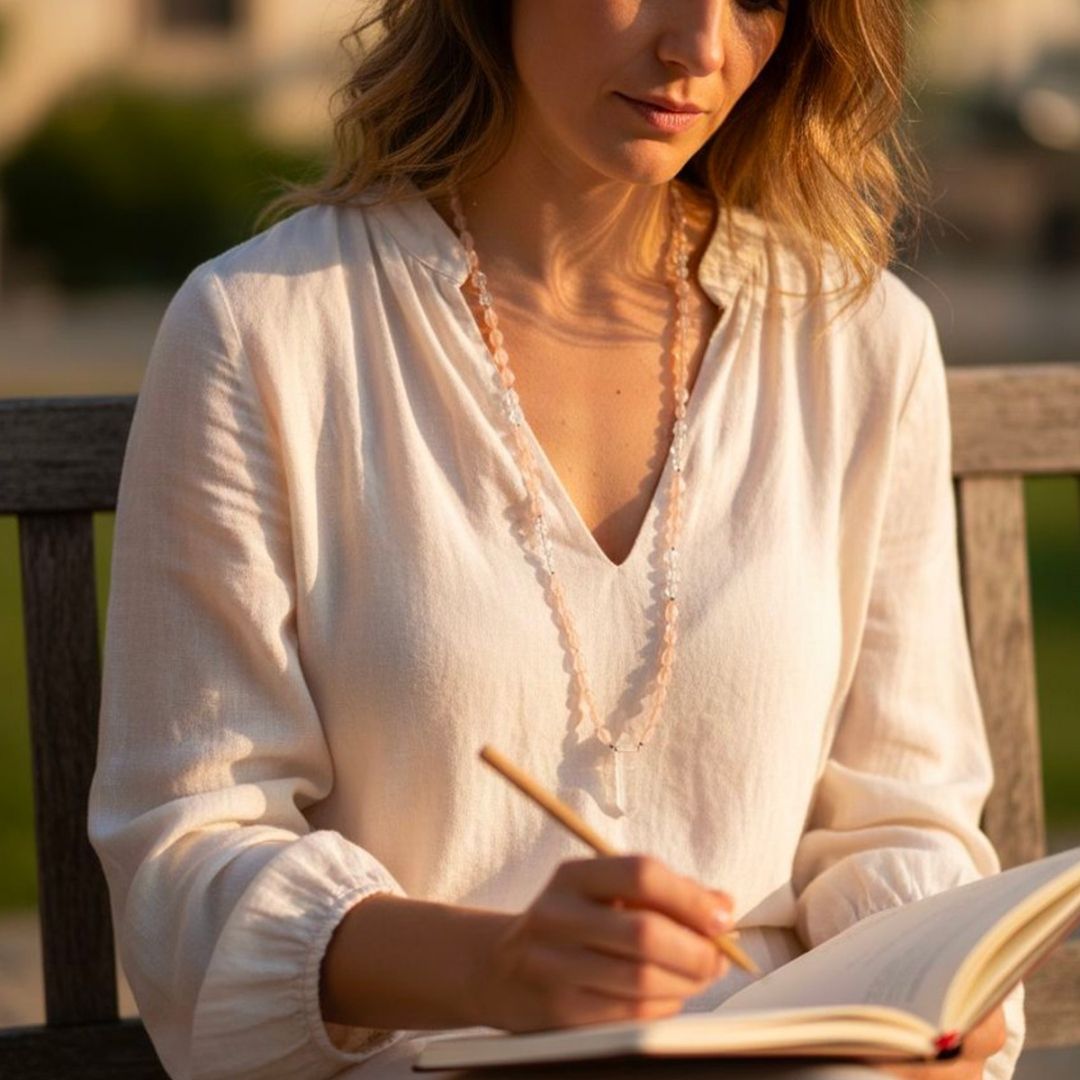
At first glance, a japamala may look like a simple elegant accessory, a special necklace with an oriental charm. In reality, it is an ancient tool that has been used for centuries by yogis, monks and spiritual seekers as a support for meditation and conscious prayer.
The word japamala comes from Sanskrit: mālā means “garland” and japa refers to repetition. It is therefore a kind of meditation rosary used for the ritual recitation of mantras, sacred names or prayers. A practice that, in different forms, can be found in many religious traditions such as Hinduism, Buddhism, Christianity and Islam.
In Italian, the word “rosary” comes from the ancient custom of offering a crown of roses to the Virgin Mary, where each flower symbolically represented a prayer. This parallel helps us understand how universal the need for mindful repetition truly is.
Why does the japamala have 108 beads?
A traditional japamala is made of 108 beads, or of submultiples such as 54, 27 or 9, which are very common in wrist malas. The number 108 is considered sacred and full of symbolic meanings.
According to some interpretations:
– 1 represents supreme consciousness
– 0 symbolizes cosmic emptiness
– 8 refers to the elements of nature: space, air, fire, water, earth, individuality (ahamkara), mind (manas) and intuition (buddhi)
Another interpretation associates zero with Shiva, eight with Shakti and one with their union in Yoga.
108 is also a Harshad number, meaning it is divisible by the sum of its digits. In Sanskrit, harshad means “that which brings joy”.
Some traditions say that 108 are the skulls in the necklace of the goddess Kali, while others speak of 108 reincarnations needed to reach enlightenment. For others, 108 represents the universe itself: 12 zodiac signs multiplied by 9 planets.
Swami Satyananda Saraswati offered a simpler and more practical interpretation: according to the experience of the ancient Rishis, 108 is simply the ideal number for meditation practice, without the need for intellectual explanations.
To complete 108 repetitions:
– a 54-bead mala is passed through twice
– a 27-bead mala four times
– a 9-bead mala twelve times
What is the Meru bead and what is it for?
Every japamala includes a larger bead called meru or sumeru, also known as the guru bead. It should never be passed during recitation. It symbolizes the bond between teacher and student and marks the end of a cycle of 108 repetitions.
When you reach the Meru and wish to continue, you reverse the direction of the beads. This gesture brings the mind back to presence and awareness.
How to use a japamala correctly
During meditation, the japamala is used with the right hand. Each bead is moved between the thumb and the middle finger. The index finger, symbol of the ego, remains lifted and does not touch the beads. The little finger is also not used, as it is associated with inertia.
The mantra is recited or whispered with full attention. The movement of the fingers helps maintain concentration and prevents mental automatisms. In this way, the japamala becomes a true tool for inner discipline.
Materials: seeds, woods and natural stones
Japamalas can be made from different materials:
– rudraksha seeds
– sandalwood
– lotus seeds
– natural gemstones
They often end with a tassel that represents the Sahasrara, the crown chakra, the thousand-petaled lotus. Its movement recalls the energy generated during meditation.
According to tradition, the japamala is worn around the neck or on the left wrist, while during meditation it is held in the right hand.
How to choose your japamala
Choosing your japamala should be guided by instinct. It becomes a personal object, a spiritual companion. Listen to yourself, observe your inner needs and let the stones “call” you.
At different times in life, you may feel attracted to different crystals. Some stones resonate better in certain phases, while others may not be suitable at a given moment.
For example, if you are going through a period of strong emotions, a heart chakra stone may amplify feelings too much. In this case, you might prefer crystals that promote communication or grounding.
Even the mantra can change over time. Let life guide you toward the one that best suits your current path.
Create your personal ritual
Before you begin, take a few days to observe yourself. Notice recurring thoughts, dominant emotions, emerging difficulties. Without judgment.
Then create a welcoming space: cushions, a blanket, a herbal tea, fragrances. Surround yourself with what you love. This is your sacred moment.
Dedicate at least five minutes a day only to yourself, preferably at the same time each day. Do not listen to guilt or excuses. If you don’t learn to love yourself, you won’t be able to truly love others.
Write down the positive sensations you feel at the beginning of your ritual. They will help you when motivation decreases.
Be gentle with yourself. If you skip a few days, nothing bad happens. Consistency grows slowly, without pressure.
Stone japamala: beauty and value
Natural stone malas are available in many variations. Since they are often heavy and precious, they are also worn as spiritual jewelry.
Some stones are sold by weight and may have a value similar to silver. Quartz, jade, agate, turquoise, amethyst: each material is mainly associated with a specific chakra.
Today, japamala is increasingly worn as a necklace. The hope is that those who wear it respect its origins and understand its deep spiritual meaning.
Energetic cleansing of your japamala
The mala absorbs energy, which is why it is important to cleanse it periodically. You can do this in different ways:
– exposing it to sunlight or moonlight
– placing it inside a Tibetan singing bowl and letting it vibrate
– passing it through the smoke of natural incense such as white sage or palo santo
– resting it on an amethyst cluster or a clear quartz crystal
– “bathing” it in OM frequency music vibrations
Taking care of your mala is an act of love toward yourself. A small ritual that reminds you every day to slow down and listen.